Showing posts with label louise david lc. Show all posts

Saturday, 28 February 2015

Sunshine, cups of tea and yellow cards.

The forgotten world of private midwifery care.


Having a baby is the most special and anticipatory time of most people's lives. The care you receive in your pregnancy is of utmost importance. Knowing that you and your baby are in the safest of hands for your prenatal care is essential to rest easy at night.

I want to talk about today, something that is not well known and understood, and even not necessarily readily available, in our culture - private midwifery care. Having your own midwife who looks after you and your baby and guides you safely on your pregnancy journey and beyond.

Here are a few misconceptions about private midwifery care:

  • It's alternative, or for hippies
  • It's only for if you're having a home birth
  • It's very expensive
  • There's no health fund or medicare rebates
  • If something goes wrong you don't have a doctor or hospital available
Let me clarify...
Private midwifery care is available as an option for every woman. It's a flexible model of care that can be adapted to suit every woman no matter what their health status and intended mode and place of birth.
With recent progress with medicare, private midwifery is now more available to more women. If your midwife is a medicare eligible midwife then your care is likely to attract a medicare rebate, with some midwives completely bulk billing all ante and post natal care, add to this some health fund rebates and private midwife care is now more affordable than ever.  
Finally, a midwife, even working in a private capacity, is part of a multidisciplinary team. If difficulties arise at any stage there is a smooth process of collaboration and referral with other care providers, be it your GP or local maternity unit. Your midwife and you work together to adapt your care to your changing needs. 


Private ob v Private midwife

similarities - 

one on one individualised care

differences - 

  • wait time - your midwife comes to you and you're never waiting in busy, overbooked clinics

  • you really get to know and trust each other 

  • you form a team together - planning, discussing and choosing every step of the way. Not just the 'pilot guiding his ship' to quote an obstetrician I know.

  • ob antenatal appointment 5-10 min, midwife 45-60+ min

  • There is little need for prenatal classes with private midwife care as every midwife appointment is filled with little bits of information and education, it's a pregnancy worth of prenatal education sessions. We talk about the baby to be and the role it's being born into.
homebirth midwife
Your midwife comes to you.
You get to know and trust each other over many
 relaxed friendly antenatal appointments.

Trusting, relaxed, confidant - you're in safe hands.
this is going on in the background -
No need for babysitting or dragging bubs to boring,
long wait-it-out doctors appointments.

He's learning about becoming a big brother.


Care options...

Depending on your situation your care plan is tailored to suit.
In a normal, healthy, low risk pregnancy your care is taken on by the midwife and if any need arises she works together with the multidisciplinary team to support you in your care. This care is best suited to a home birth plan, but can also be adapted for hospital birth.

Midwife shared care is a great option to get the 'best of both worlds'. This is the same as the common GP shared care model with added perks: being in your own home, no wait time, private care continued postnatally.
This model works best for women who are planning to have their baby at hospital and also for women planning a home birth if there are minor complications in their pregnancy i.e. diet controlled GDM or history of complications in previous pregnancies.
The reason it works best for these cases is the women becomes familiar with the hospital, she books in, she sees the staff obstricitan and then carries on her care with her midwife with intermittent visits back to the hospital (at 30 weeks and then from 37wks). When time to birth arrives or transfer (in case of a home birth), the hospital and woman have a relationship and the transition of care is smooth and problem free.


Postnatal care...

Probably the best thing about private midwifery care is the relationship that has been fostered and grown in the pregnancy continues through the postpartum period. Your midwife you've come to know and trust visits you as needed in the postnatal period. Postnatal care continues into the 6th week postnatally. this care is usually included in the care package and is also eligible for medicare and private health rebates. 


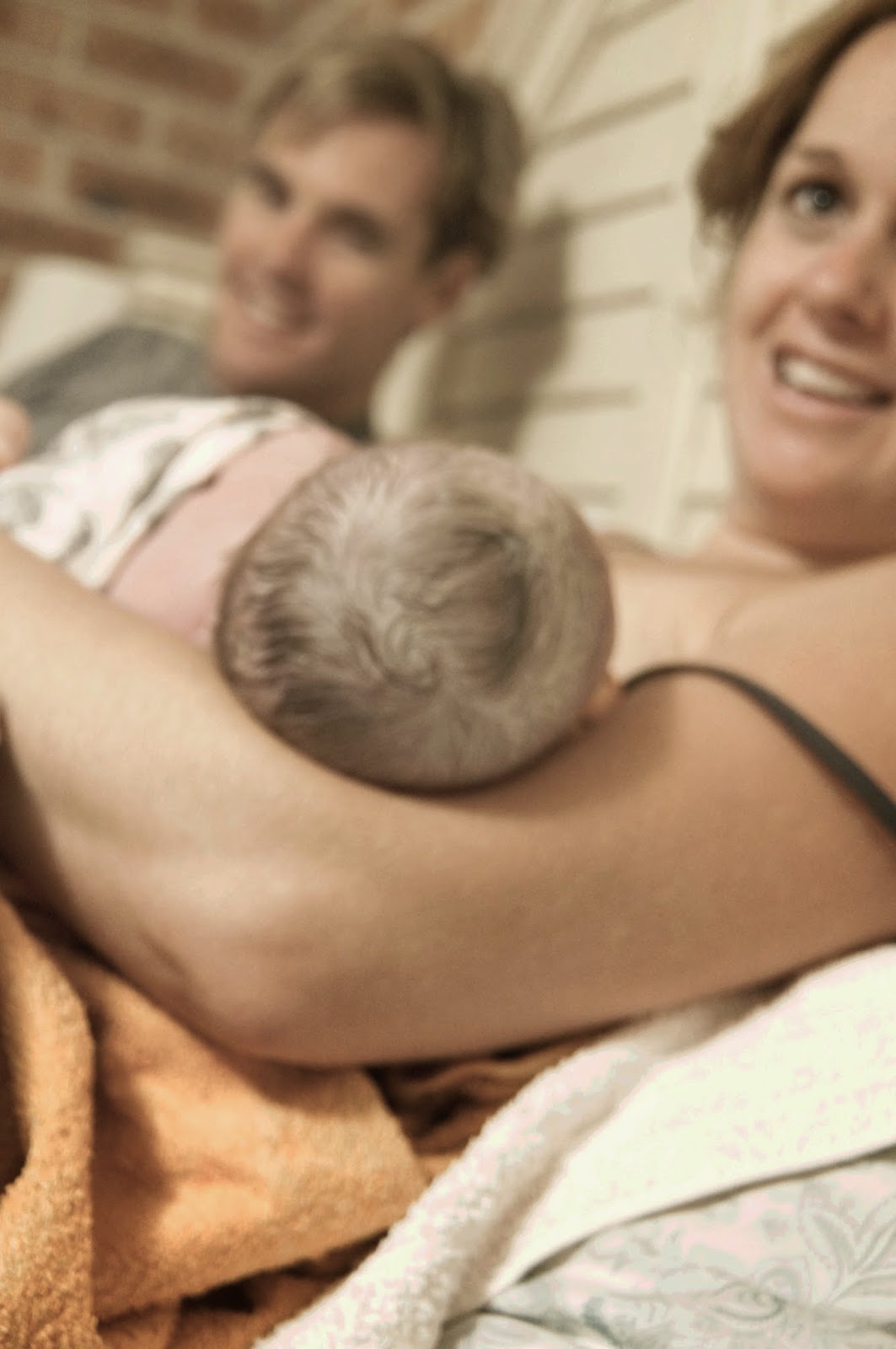
Hannah and Andy enjoy the perks of private midwifery care.

If you are interested in private midwifery care in the Wollongong area and its surrounds don't hesitate to contact me by Email. Remember midwife care is a valid option for every woman and care can be tailored to suit your individual needs. Lastly, it's never too late to employ the services of a midwife, if you are unhappy with the care you are receiving this pregnancy (remember it's not just pregnancy, but birth and beyond) don't wait "until next time", take action, choose the care you deserve.

until next time, Louise x


Monday, 2 February 2015

Brown paper packages tied up with string.....

These are a few of my favourite things.....

About being a midwife at a home birth.


Not being welcomed at the door... 
tippy toeing in, following the sounds...finding this.


Estimating the progress of labour, 
just by being with and watching.


just waiting...
getting close now...
secretly wishing she births in this spot where the light is amazing!


Alas... 
back to the safety, warmth, comfort of the darkened birth pool.


that cord...


The relief, when all is done, from all involved....
The idea that bed is near....


Sneaking just one with the flash ;-)


Counting 10 and 10.


Saying goodnight, you were amazing x


What a joy and privilege to be present for this families birth of their new daughter. It was on the spur of the moment when their midwife fell ill and asked me to cover her as back up until she could be back with her clients.
Lucky for everyone their midwife came good, the family had two happy midwives present (one wielding the camera). 

Birthing at 3am poses some difficulty for the birth photographer, trying to maintain the calm and darkened birth environment without compromising the quality of the pics too much.
The birth photos here are quite fuzzy and grainy from the lack of light, but they still tell the picture here so beautifully.

Thank you to this family for welcoming me in to their home for their birth and to my friend and colleague Rachele Meridith for being a support and teacher.

Until next time,

Louise x


Sunday, 8 June 2014

Lactation Consultant Wollongong - Louise David

Dreaming of breastfeeding ~ 

Im dedicated to my profession, thats for sure.

I share my passion and respect for all things breastfeeding and birth with my sons daily.

Every evening we talk about our favourite and least favourite things from that day, cuddling a new babe or seeing a babe take to the breast after some difficult time often tops my list.

Last night i dreamt that the children were given a passage of writing to analyse for their homework, they had to read it and share with the class what it was about. I was proud of my boys because they were so familiar with the scene that they were almost bored with it. The rest of the class were in fits of giggles and disbelief, how sad that my boys beliefs would be challenged by their reactions.

I always have the most vivid of dreams and i remember them with great detail. I write here the passage as i see it in my dream from a print out the teacher pasted in their homework book....


"Jamie looked intently, pink flesh against bulbous white. Warmth radiating he could feel it from across the mattress. The noises were familiar, but from some time ago.
He didn't know how to name the feeling he felt or even why he did. 
He wanted to shoo the little creature out of the way and take its place.
Soon enough his mamma invited him to her embrace.
As the warm flow of love reached the depth of his stomach that little ball of angst melted away.
Jamie was home, he is happy. "Happy birthday Jamie" his mamma said. Jamie is 5 today"


My boys that inspire me xxx


Way to go dream land.... where will i go next.

Happy days,

Louise x

Tuesday, 27 May 2014

Boob Sandwich ~ getting that perfect latch....

There is so much focus on the baby's position when coming in to the breast, her nose position, her open mouth, tongue down etc etc. We often forget about some of the other basics.

Nearly all nipple pain is a result of a shallow latch and one of the most common reasons for the shallow latch is so so easy to fix.

This is the most common and most simple correction i make when i assist mums and babies with latching.

The mother's hand position....


Not this - Fingers are too close to nipple. Baby will not be able to latch deeply. 
1- step 1 - take handful of breast deep into the breast with your free hand.
2 - step 2 - press thumb into breast, this leads to the tilting of the breast in photo 3. The boob sandwich.
3 - the tilt of the breast in this photo is a little exaggerated but the aim is to present a large amount of breast tissue. The tilt ensures an asymmetric latch. In this position the baby's nose is towards the thumb and chin towards the fingers.


... and again but this time the hand position is for football or underarm hold.
Not this - fingers too close. This is where baby's mouth needs to be.
1 - Deep handful of breast tissue. Nose towards thumb, chin towards fingers.
2 - Thumb into breast to tilt and present breast tissue to baby. Make a boob sandwich.
3 - Move those fingers right away. This is where the chin and bottom lips need to come in.


football hold - mums view

It's simple, how can baby get enough breast tissue in his or her mouth when mums fingers are where the mouth needs to be?

Move your fingers right back, and with a few other tweaks watch baby get that deep latch every time and say goodbye to sore nipples and a fussy baby because now she can get more milk!


Why baby needs a deep latch....
Pain and comfort levels aside, if the baby is not latched deeply into the breast she has to rely very much on the vacuum component of her suck to remove the milk. If she is positioned deeply then the milk is more easily removed. 


See here the deep latch, see how being latched well is important for transferring the milk from mum to baby.


This latch is too shallow. You can even see milk in the corner of his mouth, evidence of a poor latch. If the breast is to full and firm to "sandwich" well, hand expressing to soften around the areola is very helpful.
The "Boob Sandwich" can be a helpful when older babies are teething and doing a lot of busy on/off feeding, always ensuring a nice big mouthful of breast and protecting the nipples.


I hope this has helped, especially if you're in the early days where its so normal to be all fingers and thumbs and it just feels awkward. Keep at it, before you know it you'll be breastfeeding with your eyes closed, quite literally hopefully!


look at this gorgeous latch....

Tuesday, 6 May 2014

Louise David ~ Birth Photography


Wollongong Birth Photographer... 


Many people less appreciative of the birthing process than i ask, "why on eath would someone have a birth photrapgher present at their birth?". Our inability to comprehend each other is equal. Them, why you'd have one? and i, why you wouldn't? ...


To me, as a mother and a practicing midwife and Doula, birth is an unequivocal event in ones life. The anticipation of months of growing up and dreaming of this little life inside you is shared by your partner and loved ones by your side. To think you could fall so much in love with something you've not even laid eyes on yet.


Finally the physical and emotional preparation for the labour and the birth pay off as your innate birthing ability takes over. The lounge room, bedroom, bathroom, hospital room or operating theatre is overpoweringly taken over by emotion. Palpable raw energy of this powerful process that is going on. Finally, inevitably the baby arrives. The feelings that those witnessing would have thought couldn't get much more, explode exponentially! There are always tears... happy ones.


This is why one would want a birth photographer. 
To capture this magic. 
Im so excited to offer my service to women of the Illawarra. 
Whether your birthing at home, Wollongong hospital or out of the local area, consider inviting me to join you. For someone who respects birth and birthing women so much it would be an honour to capture you in your finest moment.


"I love to look back over my birth photos, i see a photo that captures the pain of a contraction and then a photo that captures the moment of his birth and i can relive that extraordinary explosion of feeling relief, pride and every other exquisite emotion all at the same time... I'm so happy i have my birth journey captured, it really is my finest moment"

Sarah on the photography of baby Taj's home birth


Click on the link below to see the photo montage of Hannah's labour and Eden's birth.


Edens Birth


I was so humbled to be present at and photograph the birth of my oldest friend as they welcomed their first baby to the world.  Hannah was such a goddess as she stayed strong through the relentless hours of contractions. The lack of fear and the control she possessed made me so so proud of her. She reminded me why i am a midwife, why i love birth and home birth and why i want to immortalise these moments in time by doing this.


 Wollongong Birth Photographer - 
Louise David Lactation Consultant

Take a look at my website for more of my work. You can see more photo montages and find out about birth photography prices and what i offer.

You can also find out about the other services i offer including home visit lactation consultation, breastfeeding education, Doula services and postnatal midwife services.

Don't hesitate to call or email me to find out more.

Until next time, 

Louise x


Wednesday, 6 November 2013

Breastfeeding through separation.


Families in the midst of separation have incredible amounts of stress and difficulty within their lives, add to that a young family among whom include a breastfeeding mother and baby and levels of stress and concern can be overwhelming. This topic is close to my heart having separated from my husband and father of my 3 boys including my little breastfeeding one who was only 12mths old at the time. I was to learn that maintaining the breastfeeding relationship while the martial relationship falls apart is possible and provides a lot of comfort and security in an otherwise tumultuous time.
There are three main themes that are stand out, these are how to help baby cope with her new home life. What and how to feed baby when she’s not with her mother and finally how to manage and maintain milk supply.

The biggest factor that will determine the amount of impact the separation will have on the breastfeeding relationship is probably the age of the baby. The mother of a very young baby is going to face different and varying degrees of struggles to the mother of a breastfeeding two year old.  At any age the relationship of the parents is so very important for babies comfort and security. An amicable relationship with babies best interests as the key focus is absolutely essential for breastfeeding to be preserved.

The most important factor to maintain in babies everyday life is stability. If baby is still very much feeding through the night or has been co sleeping with mum there needs to be a gentle transition from this before she can happily go with bags packed off to dads for the night. A loving gentle dad will see the importance in taking this slowly; and mum, even though she’s clinging on to these precious moments, will slowly and gently ease them to some form of night parenting that can be done equally as well by dad.
It’s not those night feeds or night cuddles that are essential for baby to feel safe and thrive but when moving between two home environments consistency is. Imagine for a moment, baby 4 months old co sleeps and breastfeeds all night long with mum 4 or 5 nights a week and then the other nights dad is trying to settle baby in a cot with a dummy or a bottle. Dad isn’t going to have a fun time and baby is going to be stressed beyond measure.
Communication is essential. Mum and dad need to discusses their wants and needs for baby. Breastfeeding is something to strive to preserve. Because a baby is breastfed it doesn’t mean dad’s time has to suffer, the whole family needs to be flexible and give and take.
While ever dad is happy with mum doing the night time parenting mum and baby can carry on as is, breast feeding, cuddling and co sleeping as much as possible because soon enough dad will be ready and wanting night time access. When dad is ready for night time parenting there are no set rules and many options. For baby it would be helpful for both houses to follow the same night parenting plan. If dad weren’t willing to co sleep it would be helpful for mum not to co sleep either. Perhaps mum could reserve co sleeping for day naps and baby goes down in her bed at night. If baby were breastfeeding through the night dad could offer a bottle through the night, this would mean effort with expressing and milk handling but would preserve those night feeds if baby is still of a young age. As baby is getting older and night feeds less important night weaning is something that can be considered at some stage. It is probably much sooner than baby would have naturally done so but can make night parenting easier all round.

“My son was 12 months old when I split from his dad. Being an attachment parent Rhys had barley left my side since he was born. He was heavily breastfed and co slept most nights. Dad was very aware this was going to be a big transition for the both of us. For the first couple of weeks we kept it to daytime and evening parenting for dad. While the nights I worked on night weaning and settling him in his own cot.
It was far easier than I anticipated. I think the age helped I could talk to him, “no boobie, nigh nighs in cot” and id lay on the floor next to his bed, tap the pillow for him to lay down and id stroke his back. There was no screaming; eerily I think he understood what was happening.
By the second week he was ready for his first night at dads, I believe he slept through for dad, and while I woke lots that night I relished the fact no one was in need of me. When Rhys came through the door the next day he ran into my arms and snuggled in for a breastfeed as happy as could be.”

Always a welcome moment when Rhys returns home.


What to feed baby when she’s away from mum will differ with the age of baby. Presumptuously there are going to be fewer young babies spending time away from mum than there are older. The older baby, older than 6 months who is eating solids and family foods can manage a longer time with out milk and really doesn’t need it replaced at all for these short-term stints. Baby should have access to lots of fruit and veg and other foods as the family eats and water from a sippy cup. Baby may like a milk feed to go to sleep, this could be ebm from mum or even just plain cows milk.
You can’t give a baby under one cows milk I hear you say?? Cows milk is inadequate as a complete milk food for babies under two, that is correct. That means if a baby’s only dietary intake is cows milk it is poor nutrition and not appropriate. If though a baby is breastfed (or formula fed for that matter) and receiving a balanced diet of other complementary foods cows milk can be welcomed in to the diet as a complementary food. Consider it the same as a drink of water or juice or custard. It’s not necessary, its not their main nutritional source, its just a drink.
The young baby however who is not yet taking solids will need more planning around time away form mum and what and how she eats. Mum can express milk for her baby; baby can take this milk from a bottle or a cup (not a sippy cup). We know bottle feeding can lead to breast refusal in some babies so cup feeding or timing visits around feeds can help to reduce the number of bottles baby receives.

“Rhys was a good eater, wed been doing baby led solids from about 5 months of age. He would go to dads with no hesitation and eat happily with his brothers, he would drink water and you would assume he wasn’t even a breastfed baby. Dad would give him a bit of warmed up cow’s milk in a bottle before bed at night where he’d fall asleep in dad’s arms, sometimes drinking all the milk sometimes not. It wasn’t long before dad even ditched the bottle and just offered a big nighttime snuggling where Rhys would fall asleep in his arms. On days he’s with mum he continues to have free access to the breast and would breastfeed to sleep every time.
As time went by he was even able to go camping with dad, sometimes for three nights and 4 days, apart from asking where mum was a couple of times he never missed a beat, he was happy and contented in family life with dad. He’d always come home to mum and snuggle up for a boob and a welcomed mummy cuddle”.

Rhys has daddy time, camping with brothers and family.
Clearly not a care in the world.


So as mums come to terms with the time she now has away from her baby, she may even be enjoying some of this new found “me” time. The final skill to master is the juggling of milk making, engorgement, pumping and expressing, all the joys of finding your self in the position of being a full time milk maker and part time mum.
How you manage and how much your supply is affected will depend on the age of the baby and how much she breastfeeds. If you break it down and try to not over think it, it presents as quite simple.
1 – when baby is with you allow free access to the breast.
2 – when baby is not with you pump when baby would normally feed. If baby feeds regularly this is easy, if baby feeds all over the place like an older baby might, just choose a couple of times that work for you.
3 - if you need to supply ebm to feed baby while she’s away you will need to add pumping to your normal day routine. For example two pumping sessions a day, say after morning feed and after lunch time, on top of your normal feeding/pumping might over the week give you enough milk for babies time away.
If your baby is older and supply is less of a concern you could just see how your breasts cope. You might find you can go all afternoon and just have a hand express in the shower before bed for comfort and stimulation sake (so your body thinks baby is still drinking this milk). You could do the same in the morning or you might be comfortable enough till baby comes home again.

“Initially I pumped using a hand pump when Rhys was away to maintain supply. Rhys was eating well and I chose not to send milk with Rhys as he didn’t drink much from the bottle any way. The milk I was pumping I put in freezer bags and donated them to mums and babies in need of donor milk. As time went by my supply had reduced, id lost a lot of weight by this time and wasn’t looking after myself the best I could.  I was finding it increasingly hard to pump. It was a round the time Rhys was 18mths old that I went form feeding on both breasts to just my left breast. My left side had always produced better and by this time 24hours could go by with out a breastfeed. I chose to feed on the one breast only because it meant the one breast would be fed on more frequently, I could focus on expressing just the one but simply just because I and Rhys preferred it.
Some times I worried about the little amount of milk that was there but all I had to do was think of Rhys and see how unphased he was by it all. He was so happy at the breast, he was still feeding to sleep and he was so happy in his busy little life with two homes. I completely relaxed and let Rhys lead. When he wasn’t with me id hand express in the shower and if I didn’t get around to it I wouldn’t worry. I never had a problem with engorgement or lop sidedness."

"these days are numbered" Rhys nearly two.


"Rhys was such a busy little toddler; even now I say he’s two going on 7. Every thing his brothers do he can do. I think back at the end of his breastfeeding journey and think he actually was torn when he was feeding because he wanted it but it was something the big kids weren’t doing. Rhys weaned himself so gradually and I’m so proud that his weaning was really led by him. I believe his living arraignments hastened the weaning process in terms of supply and him knowing he was fine with out it. But the access was there and my willingness for him to continue had he wanted to.
Slowly slowly a busy day would happen and boob didn’t come up, he’d now come home from dads and a game with brothers or a toy was more important than having a boob straight away. His feeds became so brief; he’d say ‘ah finished’. Eventually it was a couple of days between boobs.
Rhys snuggled into me the morning of his second birthday, a week or so had gone by since his previous boob. He looked up at me and with our saying anything tapped me on the boob (this was how he always asked for it), he latched on and suckled for a moment, then popped off and said finished. This was his last feed. I was fully aware of it and captured the moment in my heart.”

My baby love. 


I’m sure our breastfeeding relationship provided so much more safety and comfort for me over those 12 long moths of being newly separated and finding my new way. Our children are so resilient the only thing they need to thrive is love and care; we work so hard at trying to provide them with this we often forget about ourselves.
Relax, trust your body and your baby and most importantly trust your ex partner. Trust that they have your little ones interest at heart as much as you do and while you’re no longer living together you can work together to co parent and lovingly raise these babies that really are so lucky to have not one but two loving and safe homes.