Sunday, 11 May 2014

Breastfeeding ~ Choosing to Breastfeed through Depression.


Breastfeeding and Postnatal depression and anxiety -
a story of two mums and their personal struggles that is all too common with many many mothers today.


It goes without dispute that breastfeeding is the gold standard for infant feeding. We know the undeniable health risks of not breastfeeding for baby and mum. But what about the health risks of depression when the woman identifies breastfeeding as the sole or major contributing factor to her low mood. The health risks I speak of are serious indeed; harm to the baby or self harm to the mother, also psychosis and even suicide. It is dark and scary to think about, but this is real. Women need non biased, non judgmental support by family and health care providers to help them identify and address their mental health issues postnatally and to find the method of feeding that is right for them and their family.

Just as every baby is different, so to is every family. As much as I am and always will be the avid supporter of lactation, I am the first to acknowledge that breastfeeding is NOT for all families. Whilst the thought of continuing to breastfeed for one mum may seem depressing, difficult and impossible, for the next mum, the thought of quitting breastfeeding can be equally as impossible and heart wrenching.

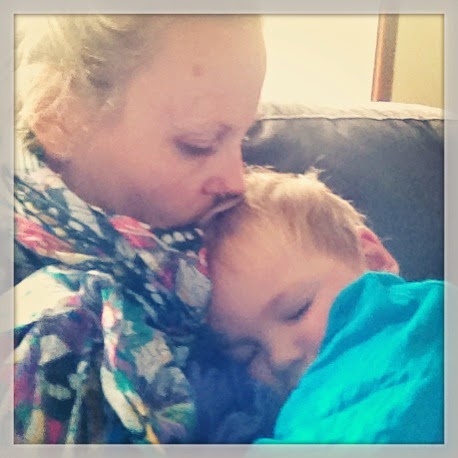
Susan with Cooper and Miles.
This photo is forever imprinted in my mind. I first seen this photo when my twins were 8 months old and i related to my dear friend on such an intimate level, this photo was how i had been feeling the last so many months. To me this photo reflects completely the internal conflict of complete and utter love and adoration for your children and complete and utter fear that you might make a decision that impacts them negatively and the hopelessness over not really having control.
Let me introduce two mums, first time mums of twin boys born a day apart from each other. These mums were proud as ever about the dramatic entrances these four little men made into the world and how far they all had come, given their rocky starts to life.  For both mums parenting twins was hard from the get go. The shock of reality was such a blow; the hardest part of all was the reality of breastfeeding. The idealistic quiet nursing sessions, the fantasy of returning the sleeping babes their beds was so far removed from the ceaseless tandem feedings, the pumping, top ups of formula, low supply and the constant unsettledness of the two demanding creatures that they somewhere, deep down, adored. Breastfeeding was staring these mums in the face. Its like there was a forked road ahead and above the road was a massive neon sign flashing BREASTFEEDING. If life was going to look up a decision had to be made, the decision was to continue to breastfeed or, let it go. Both options difficult, both involved different struggles, but they eventually had same end result, the promise of a more settled, more manageable and eventually even, a happier day-to-day life.

One of these mums was me. I chose to continue with breastfeeding. I knew it was a going to be a struggle, I was fearful of how long the struggle could carry on for but what I was more fearful of, deeply, deeply, fearful of, was the depth my depression may go if I decided to no longer breastfeed. For my mental health I HAD to choose the road to continue breastfeeding.

The other mum, Susan, a friend of mine who was so pivotal in my early parenting journey, chose the other road. For her and her family not continuing to breastfeed wasn’t the end of the world, the difficulty of day to day life whilst struggling with breastfeeding and the impact it was having on her and her family was. This truly was the hardest decision of her life to date. For this family, to let breastfeeding go and take the road that meant leaving the feeding fight behind was the road to lifting her moods and finally after a long journey a happy family.

Everyone’s journey is unique and we all find healing in different ways. I finally mastered the art of breastfeeding somewhere around the 8 month mark after a slow and difficult up hill battle. My depression was continuing but manageable. Breastfeeding and the journey I went on was something I was proud of and i continued to breastfeed the twins until they were 28mths old. I am to this day certain I made the right choice. I still fear the place I could have gone, had I chose to stop breastfeeding.

After giving up breastfeeding her twins around 12 weeks of age Susan experienced much difficulty with her emotions. Life was settling in to some sore of more mother friendly routine but she was plagued with guilt for not being able to continue breastfeeding. Susan valued breastfeeding so strongly and wanted so badly to give to her babies this gift that only she could. Susan is a strong woman, she had a wonderfully supportive husband and family and grew a strong network of mother friends. This support got her through. She became proud of her breastfeeding relationship with her twins, she was proud of the fact she was able to identify the problem and the solution and she was gratified by the fact that she chose the best decision for her family. Susan never hid the fact that she was disappointed that breastfeeding didn’t work for her and her boys. Susan was always supportive of others breastfeeding, she supported many a new twin mum of the Multiple Birth Association and the Australian Breastfeeding Association. Choosing to give up breastfeeding the twins was potentially a crippling decision, but because of the support around her the difficulty the decision brought upon her was much shorter lived. The decision became critical in resolving the depression and anxiety she was experiencing.


Susan finally fulfilled her deep desire to breastfeed when her daughter was born, the couple went on to have a very special and healing breastfeeding relationship which continued into her third year of life.

Things are finally smooth sailing at 8mths of age.
We both made the right choice. We both made our decisions based on what we knew at the time and what we thought was right for us and our families. As good as breastfeeding is for baby, is it still as good for her if mum is unable to look at her baby and smile? Is ceasing breastfeeding because mum can get more sleep or have someone else help with feeds better for mum if her depression is only going to be worse off due to feelings of guilt and failure? Mums don’t need to be told what is best, they certainly don’t need to be judged. They need support.


Once the mother is feeling supported and her struggles are normalised by the network around her, they don’t seam as big and insurmountable anymore. If though, despite the help and care she is receiving, in spite of the mothers groups, breastfeeding groups, counseling etc, she continues to struggle and her depression continues or worsens this may signify a more chemical depression and therapy may need to continue with the introduction of antidepressant medication.

Breastfeeding became my safe place,
providing me so many quiet moments in the day.
With the right support and medication where appropriate breastfeeding is able to continue, breastfeeding actually plays an important role in the maintenance of keeping depressive symptoms at bay. One of the main hormones released when breastfeeding is Oxytocin, this chemical is known as the love hormone. Oxytocin is an endorphin, a natural opiate. The release of it in to the nursing mothers blood stream reduces and counteracts the effects of adrenalin and depressive symptoms are lessened. I am sure in my case, as a breastfeeding mother with depression, my symptoms were more stable due to the numerous sessions of breastfeeding day and night. For me, breastfeeding appeared to act as antidepressants had in the past.  

Most women concerned about their emotional wellbeing will make contact firstly with their GP, sometimes even before talking about how they’re feeling with their partner. An ill informed GP might hastily put the woman on medication and insist that therefore breastfeeding would need to be ceased.  It is true that medication may well be warranted, but it is often not the first line treatment unless the PND is particularly severe. A mother and baby friendly GP will start by ensuring the mother is aware of and has access or referral to community supports and psychological counseling. This GP will also know that very few antidepressant medications are contraindicated in breastfeeding.

Getting proper support from a counselor or psychologist is imperative to getting to the bottom of your grief. If antidepressant medication is indicated in your situation counseling is still important to gain a deeper 
understanding about your depression, its origins, its triggers and also to learn strategies to cope for long term maintenance of your depression.

Some women need to look outside the square of GP and regular counseling as breastfeeding your baby can resurface other difficult emotions related to their breasts and body image. For example, breastfeeding can be a massive stress to women who have a history of sexual abuse or eating/body image disorders and specific therapy related to these will be integral in reaching a level of acceptance and salvaging the breastfeeding relationship whilst also managing their depression and/or anxiety.

Some personality types and breastfeeding don’t blend well together, but what ever your personality one thing that’s for sure is breastfeeding is the biggest test of patience most mothers will even experience. Breastfeeding and rules do not mix. Timing feeds, schedules and routines can make for stressed and deflated mums. I believe this has to do with our expectations about motherhood and newborn babies behavior. What our generation knows culturally as normal infant behavior is based on formula fed babies. When our breastfed babies don’t sleep much, want to be held all the time and feed frequently we think something is wrong. We blame ourselves. We think we have failed.

In my practice the most common people who instill this self-doubt in new mothers are unfortunately the health professionals. Be them midwives, child health nurses, lactation nurses, pediatricians or other, we constantly hear “give them a dummy, don’t give them a dummy, don’t feed to sleep, don’t share your bed, baby should only feed this long and this amount of times”. Most often than not the moment of undoing is when mum begins to listen to this advice over the advice of her own gut. Ignoring our deepest instincts can become truly exhausting and disheartening, no wonder we become depressed.

I wish for all mums to be able to be supported in their family unit, however small or large that network is, to not have to fight for what she feel is right. If she is supported then she is able to safety to explore and dig deep, to know what really is the right decision for her at this particular point in time. For me, I owe the success of continuing to breastfeed through depression to a close network of mummy friends, my twin mum friends, breastfeeding or otherwise, who I could look at them and their babies a few months older than mine and think, “they got there, they’re still alive, maybe well be ok”, and stubbornness.


Be stubborn, if everyone around you thinks they know what is right for you and it is different to what you think is right for you, then stand firm. If you think giving up breastfeeding going you make your depression worse, fight for it. Its worth it!


Final Words...

For my third baby, Rhys, i never even once had to consider the option of not breastfeeding. My experience with the twins provided all evidence i needed.

It was again, albeit a different one, an experience of breastfeeding through depression.

I have chronic clinical depression, mothering with such a mental health disorder has been constantly challenging and i am to this day battling and learning as i go, for the first time ever i think I'm actually winning.

I will blog more on my mothering journey in the future, for now though, never give up hope that things will get better. With the right treatment and support you can find the light. I did and I'm finally smiling again.


Community Support and Counseling Services:


Do you know a mum who is expecting?
For a mum who may have a history of depression or PND, knowing they have support lined up for after baby is home can provide such piece of mind. Find out about my gift certificates here.


Until next time...

Louise xxx

Tuesday, 6 May 2014

Louise David ~ Birth Photography


Wollongong Birth Photographer... 


Many people less appreciative of the birthing process than i ask, "why on eath would someone have a birth photrapgher present at their birth?". Our inability to comprehend each other is equal. Them, why you'd have one? and i, why you wouldn't? ...


To me, as a mother and a practicing midwife and Doula, birth is an unequivocal event in ones life. The anticipation of months of growing up and dreaming of this little life inside you is shared by your partner and loved ones by your side. To think you could fall so much in love with something you've not even laid eyes on yet.


Finally the physical and emotional preparation for the labour and the birth pay off as your innate birthing ability takes over. The lounge room, bedroom, bathroom, hospital room or operating theatre is overpoweringly taken over by emotion. Palpable raw energy of this powerful process that is going on. Finally, inevitably the baby arrives. The feelings that those witnessing would have thought couldn't get much more, explode exponentially! There are always tears... happy ones.


This is why one would want a birth photographer. 
To capture this magic. 
Im so excited to offer my service to women of the Illawarra. 
Whether your birthing at home, Wollongong hospital or out of the local area, consider inviting me to join you. For someone who respects birth and birthing women so much it would be an honour to capture you in your finest moment.


"I love to look back over my birth photos, i see a photo that captures the pain of a contraction and then a photo that captures the moment of his birth and i can relive that extraordinary explosion of feeling relief, pride and every other exquisite emotion all at the same time... I'm so happy i have my birth journey captured, it really is my finest moment"

Sarah on the photography of baby Taj's home birth


Click on the link below to see the photo montage of Hannah's labour and Eden's birth.


Edens Birth


I was so humbled to be present at and photograph the birth of my oldest friend as they welcomed their first baby to the world.  Hannah was such a goddess as she stayed strong through the relentless hours of contractions. The lack of fear and the control she possessed made me so so proud of her. She reminded me why i am a midwife, why i love birth and home birth and why i want to immortalise these moments in time by doing this.


 Wollongong Birth Photographer - 
Louise David Lactation Consultant

Take a look at my website for more of my work. You can see more photo montages and find out about birth photography prices and what i offer.

You can also find out about the other services i offer including home visit lactation consultation, breastfeeding education, Doula services and postnatal midwife services.

Don't hesitate to call or email me to find out more.

Until next time, 

Louise x


Wednesday, 6 November 2013

Breastfeeding through separation.


Families in the midst of separation have incredible amounts of stress and difficulty within their lives, add to that a young family among whom include a breastfeeding mother and baby and levels of stress and concern can be overwhelming. This topic is close to my heart having separated from my husband and father of my 3 boys including my little breastfeeding one who was only 12mths old at the time. I was to learn that maintaining the breastfeeding relationship while the martial relationship falls apart is possible and provides a lot of comfort and security in an otherwise tumultuous time.
There are three main themes that are stand out, these are how to help baby cope with her new home life. What and how to feed baby when she’s not with her mother and finally how to manage and maintain milk supply.

The biggest factor that will determine the amount of impact the separation will have on the breastfeeding relationship is probably the age of the baby. The mother of a very young baby is going to face different and varying degrees of struggles to the mother of a breastfeeding two year old.  At any age the relationship of the parents is so very important for babies comfort and security. An amicable relationship with babies best interests as the key focus is absolutely essential for breastfeeding to be preserved.

The most important factor to maintain in babies everyday life is stability. If baby is still very much feeding through the night or has been co sleeping with mum there needs to be a gentle transition from this before she can happily go with bags packed off to dads for the night. A loving gentle dad will see the importance in taking this slowly; and mum, even though she’s clinging on to these precious moments, will slowly and gently ease them to some form of night parenting that can be done equally as well by dad.
It’s not those night feeds or night cuddles that are essential for baby to feel safe and thrive but when moving between two home environments consistency is. Imagine for a moment, baby 4 months old co sleeps and breastfeeds all night long with mum 4 or 5 nights a week and then the other nights dad is trying to settle baby in a cot with a dummy or a bottle. Dad isn’t going to have a fun time and baby is going to be stressed beyond measure.
Communication is essential. Mum and dad need to discusses their wants and needs for baby. Breastfeeding is something to strive to preserve. Because a baby is breastfed it doesn’t mean dad’s time has to suffer, the whole family needs to be flexible and give and take.
While ever dad is happy with mum doing the night time parenting mum and baby can carry on as is, breast feeding, cuddling and co sleeping as much as possible because soon enough dad will be ready and wanting night time access. When dad is ready for night time parenting there are no set rules and many options. For baby it would be helpful for both houses to follow the same night parenting plan. If dad weren’t willing to co sleep it would be helpful for mum not to co sleep either. Perhaps mum could reserve co sleeping for day naps and baby goes down in her bed at night. If baby were breastfeeding through the night dad could offer a bottle through the night, this would mean effort with expressing and milk handling but would preserve those night feeds if baby is still of a young age. As baby is getting older and night feeds less important night weaning is something that can be considered at some stage. It is probably much sooner than baby would have naturally done so but can make night parenting easier all round.

“My son was 12 months old when I split from his dad. Being an attachment parent Rhys had barley left my side since he was born. He was heavily breastfed and co slept most nights. Dad was very aware this was going to be a big transition for the both of us. For the first couple of weeks we kept it to daytime and evening parenting for dad. While the nights I worked on night weaning and settling him in his own cot.
It was far easier than I anticipated. I think the age helped I could talk to him, “no boobie, nigh nighs in cot” and id lay on the floor next to his bed, tap the pillow for him to lay down and id stroke his back. There was no screaming; eerily I think he understood what was happening.
By the second week he was ready for his first night at dads, I believe he slept through for dad, and while I woke lots that night I relished the fact no one was in need of me. When Rhys came through the door the next day he ran into my arms and snuggled in for a breastfeed as happy as could be.”

Always a welcome moment when Rhys returns home.


What to feed baby when she’s away from mum will differ with the age of baby. Presumptuously there are going to be fewer young babies spending time away from mum than there are older. The older baby, older than 6 months who is eating solids and family foods can manage a longer time with out milk and really doesn’t need it replaced at all for these short-term stints. Baby should have access to lots of fruit and veg and other foods as the family eats and water from a sippy cup. Baby may like a milk feed to go to sleep, this could be ebm from mum or even just plain cows milk.
You can’t give a baby under one cows milk I hear you say?? Cows milk is inadequate as a complete milk food for babies under two, that is correct. That means if a baby’s only dietary intake is cows milk it is poor nutrition and not appropriate. If though a baby is breastfed (or formula fed for that matter) and receiving a balanced diet of other complementary foods cows milk can be welcomed in to the diet as a complementary food. Consider it the same as a drink of water or juice or custard. It’s not necessary, its not their main nutritional source, its just a drink.
The young baby however who is not yet taking solids will need more planning around time away form mum and what and how she eats. Mum can express milk for her baby; baby can take this milk from a bottle or a cup (not a sippy cup). We know bottle feeding can lead to breast refusal in some babies so cup feeding or timing visits around feeds can help to reduce the number of bottles baby receives.

“Rhys was a good eater, wed been doing baby led solids from about 5 months of age. He would go to dads with no hesitation and eat happily with his brothers, he would drink water and you would assume he wasn’t even a breastfed baby. Dad would give him a bit of warmed up cow’s milk in a bottle before bed at night where he’d fall asleep in dad’s arms, sometimes drinking all the milk sometimes not. It wasn’t long before dad even ditched the bottle and just offered a big nighttime snuggling where Rhys would fall asleep in his arms. On days he’s with mum he continues to have free access to the breast and would breastfeed to sleep every time.
As time went by he was even able to go camping with dad, sometimes for three nights and 4 days, apart from asking where mum was a couple of times he never missed a beat, he was happy and contented in family life with dad. He’d always come home to mum and snuggle up for a boob and a welcomed mummy cuddle”.

Rhys has daddy time, camping with brothers and family.
Clearly not a care in the world.


So as mums come to terms with the time she now has away from her baby, she may even be enjoying some of this new found “me” time. The final skill to master is the juggling of milk making, engorgement, pumping and expressing, all the joys of finding your self in the position of being a full time milk maker and part time mum.
How you manage and how much your supply is affected will depend on the age of the baby and how much she breastfeeds. If you break it down and try to not over think it, it presents as quite simple.
1 – when baby is with you allow free access to the breast.
2 – when baby is not with you pump when baby would normally feed. If baby feeds regularly this is easy, if baby feeds all over the place like an older baby might, just choose a couple of times that work for you.
3 - if you need to supply ebm to feed baby while she’s away you will need to add pumping to your normal day routine. For example two pumping sessions a day, say after morning feed and after lunch time, on top of your normal feeding/pumping might over the week give you enough milk for babies time away.
If your baby is older and supply is less of a concern you could just see how your breasts cope. You might find you can go all afternoon and just have a hand express in the shower before bed for comfort and stimulation sake (so your body thinks baby is still drinking this milk). You could do the same in the morning or you might be comfortable enough till baby comes home again.

“Initially I pumped using a hand pump when Rhys was away to maintain supply. Rhys was eating well and I chose not to send milk with Rhys as he didn’t drink much from the bottle any way. The milk I was pumping I put in freezer bags and donated them to mums and babies in need of donor milk. As time went by my supply had reduced, id lost a lot of weight by this time and wasn’t looking after myself the best I could.  I was finding it increasingly hard to pump. It was a round the time Rhys was 18mths old that I went form feeding on both breasts to just my left breast. My left side had always produced better and by this time 24hours could go by with out a breastfeed. I chose to feed on the one breast only because it meant the one breast would be fed on more frequently, I could focus on expressing just the one but simply just because I and Rhys preferred it.
Some times I worried about the little amount of milk that was there but all I had to do was think of Rhys and see how unphased he was by it all. He was so happy at the breast, he was still feeding to sleep and he was so happy in his busy little life with two homes. I completely relaxed and let Rhys lead. When he wasn’t with me id hand express in the shower and if I didn’t get around to it I wouldn’t worry. I never had a problem with engorgement or lop sidedness."

"these days are numbered" Rhys nearly two.


"Rhys was such a busy little toddler; even now I say he’s two going on 7. Every thing his brothers do he can do. I think back at the end of his breastfeeding journey and think he actually was torn when he was feeding because he wanted it but it was something the big kids weren’t doing. Rhys weaned himself so gradually and I’m so proud that his weaning was really led by him. I believe his living arraignments hastened the weaning process in terms of supply and him knowing he was fine with out it. But the access was there and my willingness for him to continue had he wanted to.
Slowly slowly a busy day would happen and boob didn’t come up, he’d now come home from dads and a game with brothers or a toy was more important than having a boob straight away. His feeds became so brief; he’d say ‘ah finished’. Eventually it was a couple of days between boobs.
Rhys snuggled into me the morning of his second birthday, a week or so had gone by since his previous boob. He looked up at me and with our saying anything tapped me on the boob (this was how he always asked for it), he latched on and suckled for a moment, then popped off and said finished. This was his last feed. I was fully aware of it and captured the moment in my heart.”

My baby love. 


I’m sure our breastfeeding relationship provided so much more safety and comfort for me over those 12 long moths of being newly separated and finding my new way. Our children are so resilient the only thing they need to thrive is love and care; we work so hard at trying to provide them with this we often forget about ourselves.
Relax, trust your body and your baby and most importantly trust your ex partner. Trust that they have your little ones interest at heart as much as you do and while you’re no longer living together you can work together to co parent and lovingly raise these babies that really are so lucky to have not one but two loving and safe homes.

Tuesday, 23 July 2013

Milk sharing ~ a little joy for you, a lot of life for another.


“These babies must only have breast milk. They are not to be given formula” Says the big authoritative neonatologist to the wide eyed scared first time mum. This is me; babies only 6 hours old after a long difficult labour and birth of baby twin boys born 9 weeks early. I didn’t question the man and without any more words exchanged the importance of human milk for these little boys and babies everywhere was concreted in my brain forever.

Over the next days and weeks as my sick babies fought to grow ex utero, I struggled to express enough breastmilk to keep up with their needs. The words of the big stern doctor rung loud in my head as I looked at the measly 20ml id managed to painstakingly squeeze from my breast. Fortunately for me, I wouldn’t have to go against the doctors orders as each baby took turns being sicker and would both be nil by mouth and this would buy me some time to stock pile some milk. I would pump every spare moment I had.

These early mothering experiences laid foundation for my later experience of milk sharing. How much pressure this new mum would have been free from had the neonatologist been able to say to me “these babies must get breastmilk, don’t worry if you cant pump enough to start with, we have a plentiful store here in our milk bank”. If only. If only for all sick babies everywhere this was the norm. The very first option after his mothers own milk. Unfortunately this wasn’t the case and still isn’t. Milk banks just don’t exist in (all but one or two) towns and cities across Australia.

Busy with my baby twins, I breastfeed the months and years away. I learn more, I study, I become a lactation consultant. I learn of all the struggles some mums go through to make sure their babies receive the little breastmilk their mum can make. I am inspired by these mums and want to help.

I give birth to a healthy full term baby boy and breastfeeding is a breeze. I realize that for me to feed my little baby with out a second thought isn’t fair. Its not fair to the next mum who is pumping, comping, on medication, using supply lines and struggling with the thought that she still doesn’t have enough milk for her baby to be exclusively breastfed.

I came across the human milk 4 human babies Facebook page. I posted that I have some milk in the freezer that id be happy to part with if any mums and babies were in need. I was connected with a few passing mums and babies here and there. Then I was put in touch with a mum who wanted donors to contribute milk for her baby on a long-term basis. This was something I could do. It took just 10 minutes of my time to help a mum and baby in such a profound way. I got into a sweet groove of pumping one breast while baby Rhys had the other boob. One pump per day would yield about 120mls. Rhys was sharing his milk, about 1 litre a week with another human baby, my milk would only cover a little over a days worth of the other babies needs but between my self and the other donors and her mother she was at times receiving wholly human milk.

Rhys with his sharing milk 


I got nothing other than the sheer feeling of doing something good for others out of sharing my milk. It wasn’t at all a selfless act because when mum and baby would make the couple of hour round car trip to collect milk, handing the little stash over in the esky felt wonderful.

It was becoming difficult to keep up my pumping, Rhys was big and wouldn’t share me with the pump as easily. The recipient babe was also now over one and mum was managing her demand much better with less need of donor milk, so I decided to stop pumping for donation.

There were still many occasions where a local mum would get in touch with our local natural parenting group at a time of need and ask for one off donations and if there was milk at hand id happily part with it.

I urge you to look up human milk 4 humanbabies, if you’re struggling with supply and keeping up with your babies need for milk than there are other options than just formula top ups. Maybe you have a freezer full of milk that your baby will never make his way through. Don’t let it go to waste, there are babies out there that need it, and mums that would cry to see it go to waste.


Sunday, 21 July 2013

Finding your breastfeeding groove ..... how to find it sooner.


Part 2 

Apart form sore nipples weeks down the track that are usually easily turned into normal nipples with a simple adjustment here and there, the other common reason holding mums back from finding peace within their breastfeeding experience is the doubt that their baby is getting enough because of how frequently baby feeds. Once it is clear to mum the reason baby feeds so often and mum embraces the frequent feedings mum can then embrace breastfeeding with peace.

Why do babies feed often?

In the early days (days 0-3) they are getting hungry. Baby is waiting for mums milk to come in.  Baby isn’t trying to bring mums milk in, baby doesn’t know its not there yet, all baby knows is that the breast is the source of food and after 48hours or so some babies are getting quite the appetite and the small volumes of colostrum aren’t quite cutting it any more. This is normal, baby does not need any formula to top her up, she simply needs access to the breast, the milk will come in and baby will soon be sated. It really is patience on mums behalf and an understanding that baby isn’t starving; the colostrum she’s getting is nourishing her plenty even if she’s adamant she wants more.

Breastmilk is a complete food, baby uses up every last bit of milk, and there is very little waste product. Breastmilk is largely water and is digested very readily. 

Babies regulate their own intake. Unlike bottle feeding where for example 150ml is taken in on time, every time. A baby feeding at the breast will take in a different amount every time. What she takes in is dependent on her appetite, when she last fed, how sleepy, how warm or cold she is, among many other factors. How much she takes will then directly affect when she feeds next. Little feed, little sleep. Big feed, big sleep. In theory J

Breastfeeding is so much more than just food. Do you only eat breakfast, lunch and dinner? All your baby needs is access to the breast and she will tell you how much and how often she wants it. It might feel like a lot. Its not a lot though, when you consider that’s what your baby needs to grow and thrive and be content because she’s not just hungry, she’s thirsty, she’s cold, she's tired, she’s lonely.... she’s smart.


Baby Louie at the boob.

Louie is slung in mums arms, he is grizzly after a car ride to the park.
He boobs.
He breaths, he drinks, he sleeps.
He lets go the boob, he's warm and full.
Brother comes bounding.
He wakes with a start,
Hes ok.
He looks all around, he's cold.
He cries.
He boobs.
He coughs and splutters, he goes back in for for more.
He's done.
He gets passed around.
He doesn't like that much.
Back to mum.
He boobs.
He's not happy, he fusses, he farts.
 He doesn't want to be put down so brother can be tended to.
He gets mum back.
 He gets the other boob.
He breathes, he drinks, he sleeps.


baby louie 6 weeks